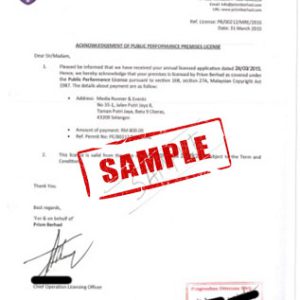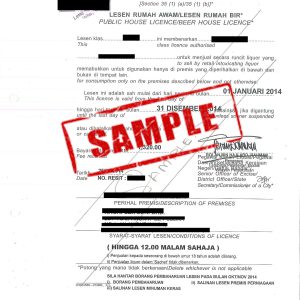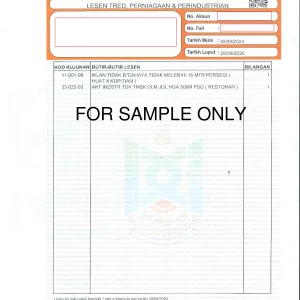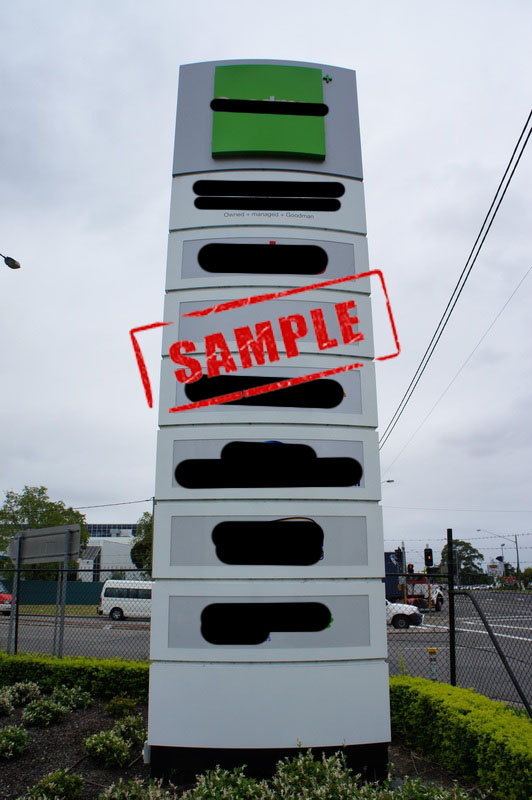
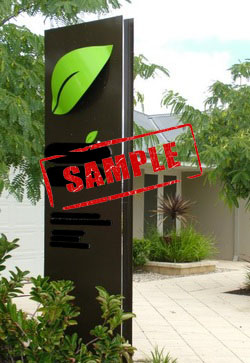
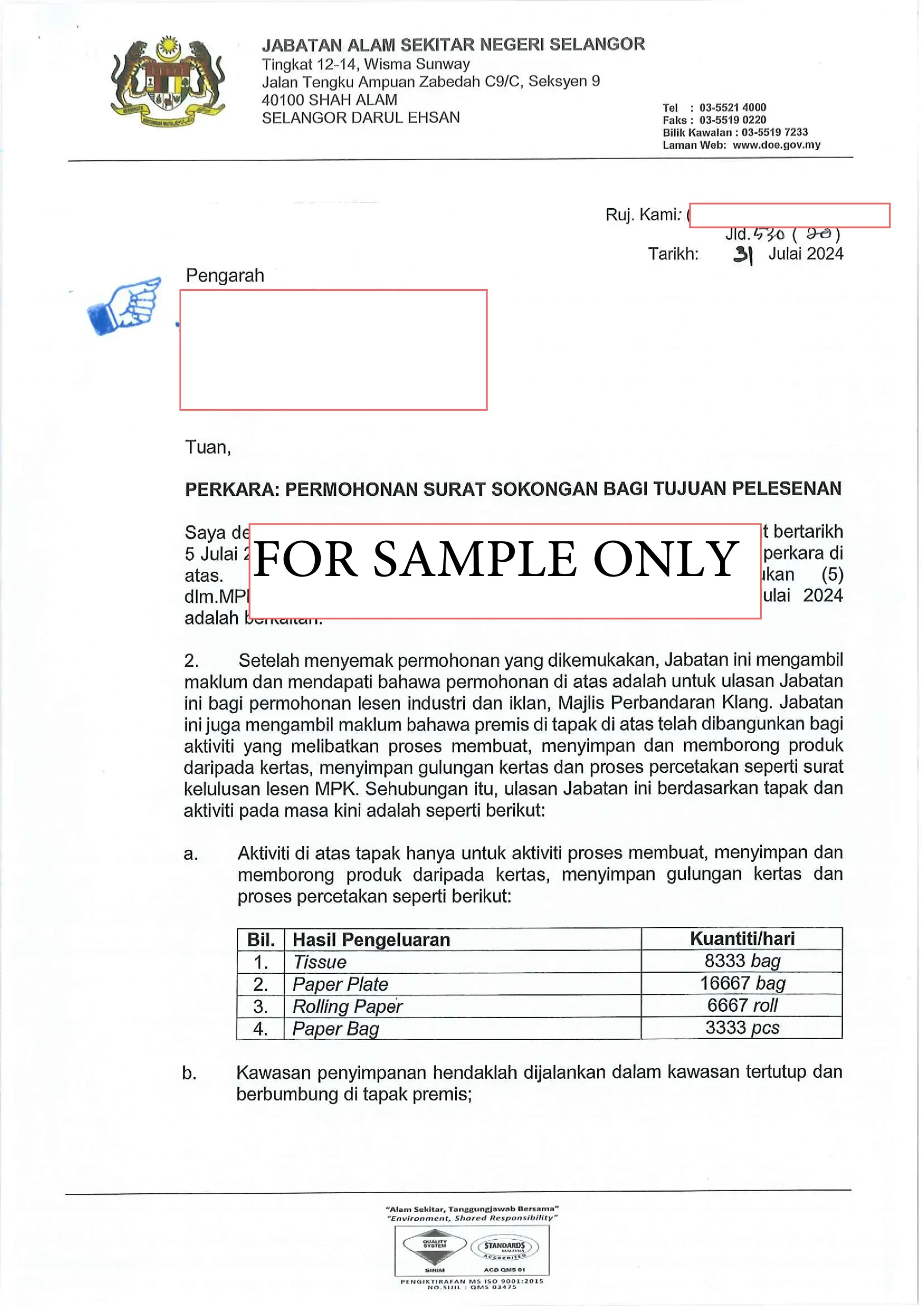
A Pylon or Facade Signage License is required for businesses in Malaysia installing permanent or semi-permanent commercial signage — from a freestanding pylon at the entrance of a complex to a fascia sign mounted on a shopfront. These are regulated by your local authority, or Pihak Berkuasa Tempatan (PBT), to ensure compliance with safety standards, zoning, and advertising by-laws.
Rejection at this stage is common, and almost always avoidable. Councils reject far more applications for missing Bahasa Malaysia wording or mismatched dimensions than for the signage concept itself. This guide covers what each signage type is, what councils actually check, the documents involved, and the mistakes that cause the most delays.
On this page
| 1. Pylon vs facade signage 2. Who needs this license 3. Size & placement rules 4. Bahasa Malaysia requirements |
5. Document checklist 6. Application process 7. Common rejection reasons 8. FAQ |
Pylon vs Facade Signage: What’s the Difference?
Both are permanent commercial signage, but councils review them differently:
|
Pylon signage A freestanding structure on its own base, typically used to identify a building, complex, or premises from a distance. Structural stability and foundation are the main review points. |
Facade signage Mounted directly onto the building exterior — a fascia, wall-mounted, or projecting sign. Review focuses on placement relative to windows, architectural features, and the building frontage. |
Corporate branding, directional signs, and identification signage generally fall under the same review process as facade signage, since they’re mounted to the premises rather than freestanding.
Size & Placement Rules
Each PBT sets its own bylaws, but the following pattern holds across most major councils, including DBKL and MBPJ:
| Signage type | Typical rule |
| General signboard height | 1.2m – 2.4m; beyond this usually needs special approval |
| Facade width | Must not exceed the width of the building frontage |
| Facade coverage | Generally should not exceed around 30% of the total building facade |
| Projecting signs | Usually limited to 600mm–1200mm projection, minimum 2.75m ground clearance |
| Higher-floor & large signage | Signage on the 5th floor and above, or horizontal signs over ~40 feet, generally require a structural engineer’s certification and public liability insurance |
Figures above reflect common practice across major councils and are not universal. Confirm exact limits with your specific PBT before finalising a design.
Bahasa Malaysia Wording Requirements
Language compliance is the single most common cause of rejection, and the easiest to get right if you plan for it early:
- Bahasa Malaysia text must generally be at least 30% larger than any other language on the sign
- It must be placed in a prominent position — typically top-left or centre
- The business activity description, not just the business name, must also appear in Bahasa Malaysia
- Wording is usually verified by Dewan Bahasa dan Pustaka before the council will approve the application
DBKL and most other councils reject applications outright — not with a query, but a rejection — if the DBP wording certificate is missing. Get this sorted before submitting a design for council review.
Document Checklist
| # | Document |
| 1 | SSM registration certificate |
| 2 | Valid business or premise license from the same council |
| 3 | Design layout with exact dimensions, colours, materials, and lighting specifications |
| 4 | Dewan Bahasa dan Pustaka wording verification |
| 5 | Coloured photograph of the proposed installation location |
| 6 | Location map or site plan showing the premises |
| 7 | Building owner or landlord consent letter, if tenanted |
| 8 | Structural engineer’s certification, for large, elevated, or freestanding pylon structures |
Requirements vary by council. Confirm your specific list with the relevant PBT or a licensed consultant before submission.
Application Process
|
1
|
Confirm council-specific rules Check size, placement, and language requirements with the PBT governing your premises before finalising a design. |
|
2
|
Secure Bahasa Malaysia wording approval Submit your wording to Dewan Bahasa dan Pustaka before the council reviews your design — this is a prerequisite, not a parallel step. |
|
3
|
Submit design and documents to the PBT Lodge the full checklist with exact measurements. Mismatched dimensions between the mockup and the installed sign are a common cause of enforcement later. |
|
4
|
Approval, payment, and installation Pay the license fee once approved, then install strictly according to the approved design and location. |
Common Reasons Applications Get Rejected
- Missing or undersized Bahasa Malaysia wording, or no DBP verification
- Design mockup dimensions that don’t match what’s actually installed
- Signage covering windows, doors, or architectural features
- Facade coverage exceeding the council’s proportion limit
- No structural engineer’s report for large or elevated signage
- Installing before approval is granted
Installing before approval, or installing a sign that doesn’t match the approved design, can result in fines, a forced removal order at your own cost, and complications with future license applications.
Frequently Asked Questions
What is the difference between a pylon sign and a facade sign?
A pylon sign is a freestanding structure on its own base, often identifying a building or complex from a distance. A facade sign is mounted directly onto the building exterior, such as a fascia or wall-mounted sign.
How tall can a pylon sign be in Malaysia?
There’s no single national limit — height allowances are set by each council and vary by zoning and road classification. Most general signage is capped between 1.2 and 2.4 metres, but freestanding pylon structures are usually assessed individually and often require structural engineer certification.
Does my facade signage need Bahasa Malaysia wording?
Yes. Most councils, including DBKL, require Bahasa Malaysia text to be at least 30% larger than any other language and placed in a prominent position, verified by Dewan Bahasa dan Pustaka before submission.
When do I need a structural engineer’s certification?
Generally for large or elevated signage — projecting or freestanding pylon signs above a certain size, or signboards on the 5th floor and above. Horizontal signs exceeding around 40 feet in length may also require public liability insurance.
Can I install pylon or facade signage before approval is granted?
No. Installing before approval risks fines, a removal order at your own cost, and can complicate future license or renewal applications.
What is the most common reason applications are rejected?
Missing or undersized Bahasa Malaysia wording is consistently the top rejection reason, followed by design mockups that don’t match the exact submitted dimensions.
Ready to apply for your pylon or facade signage license?
We handle design compliance review, documentation, and council liaison from submission to approval.