
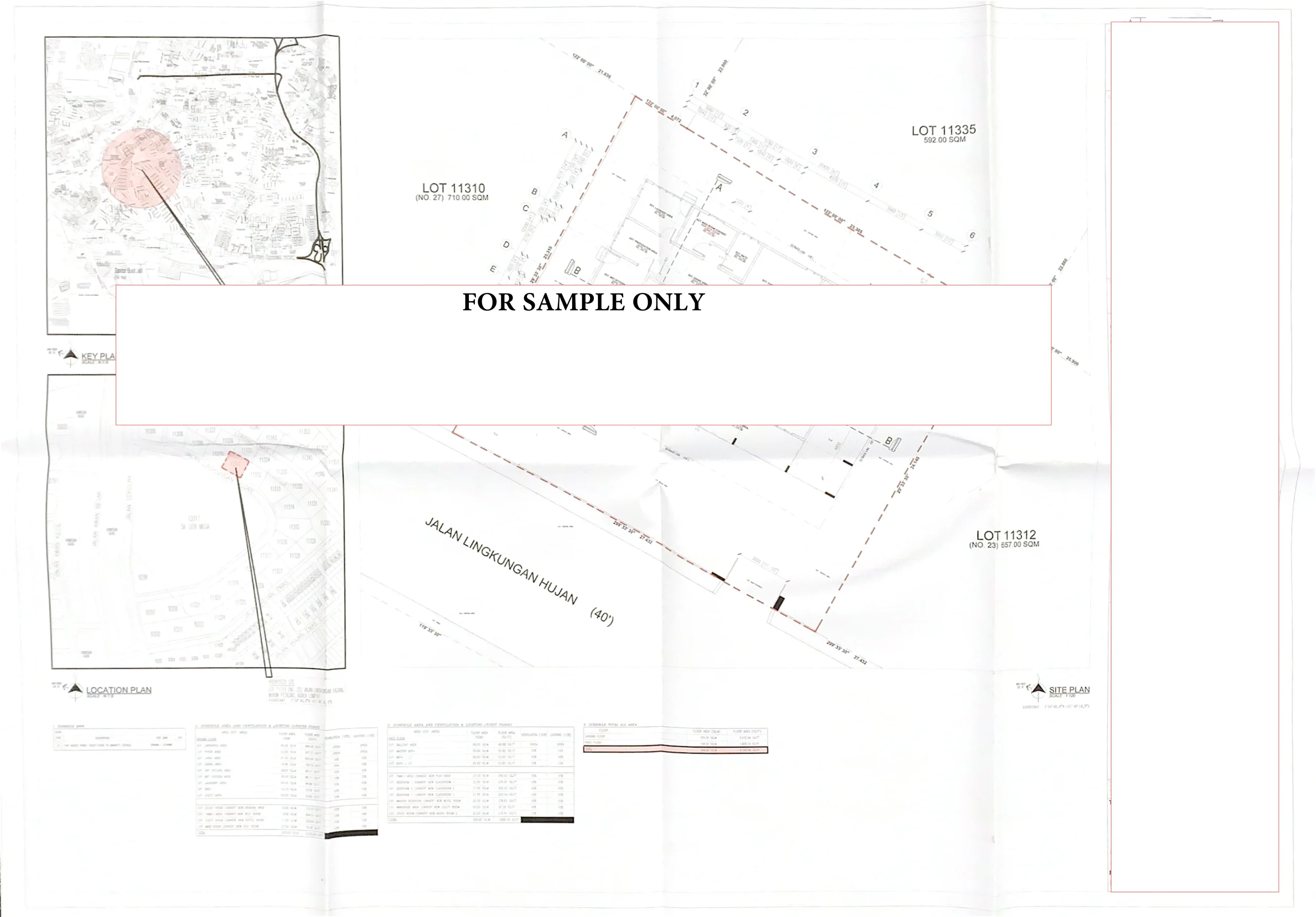
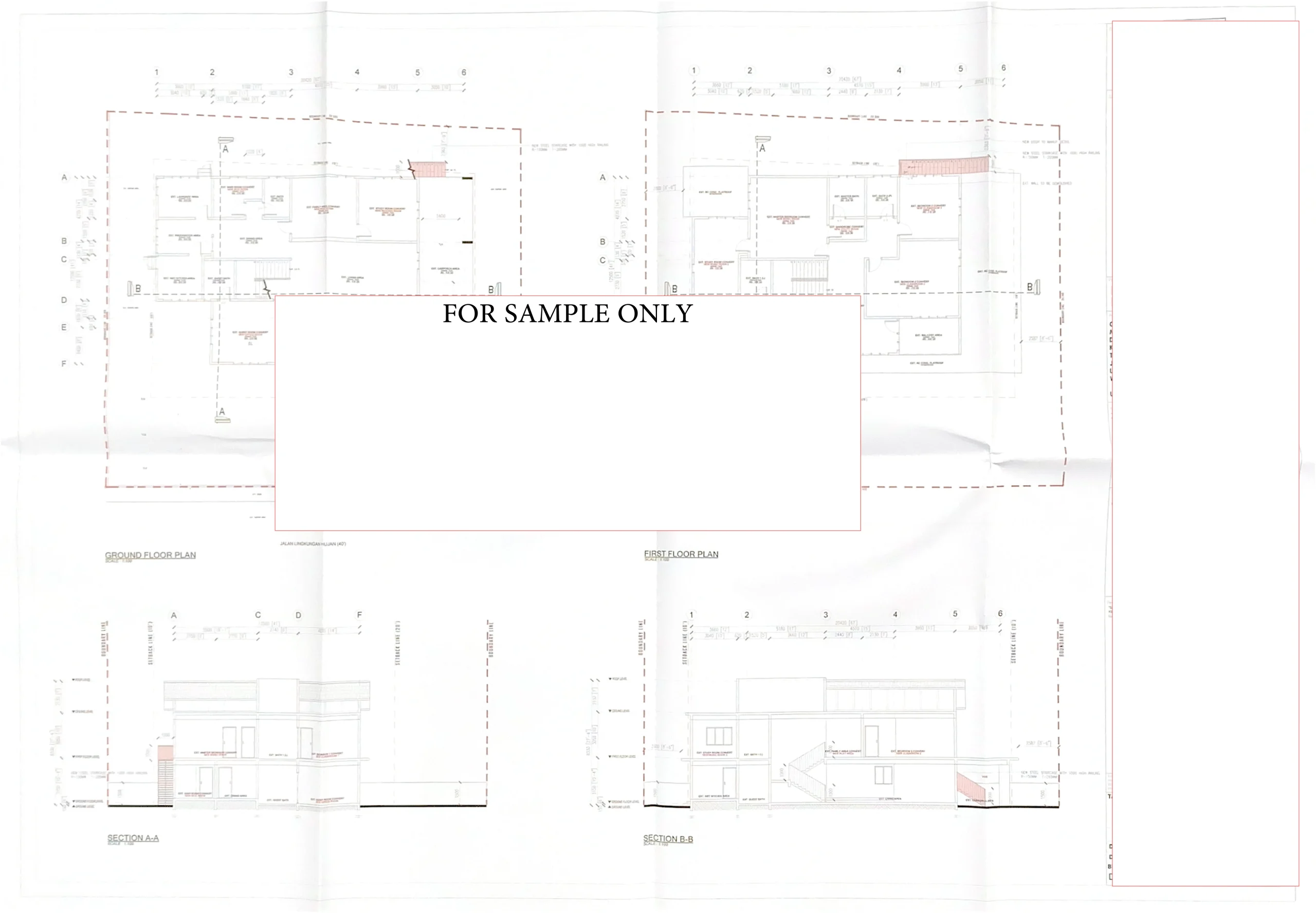
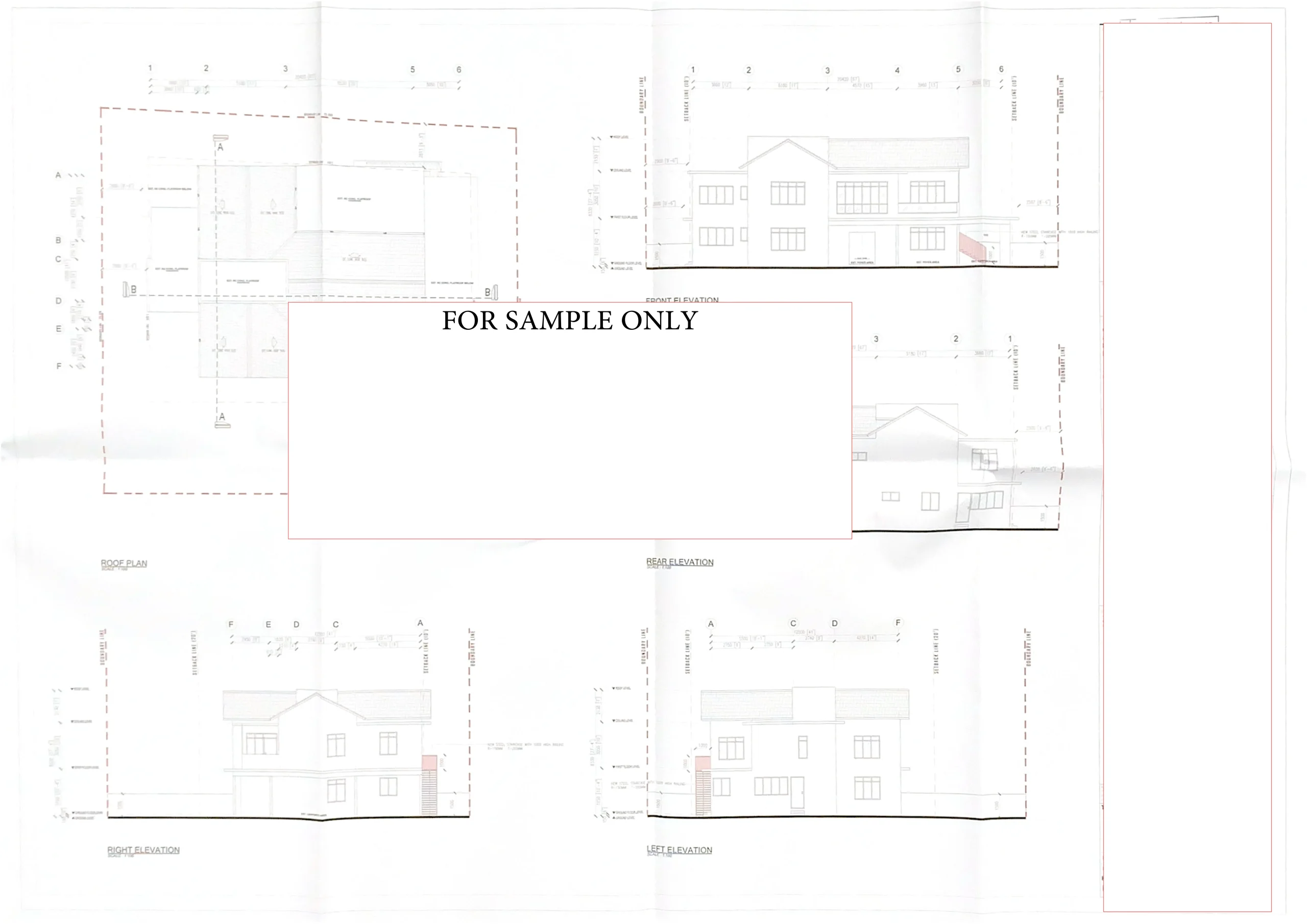
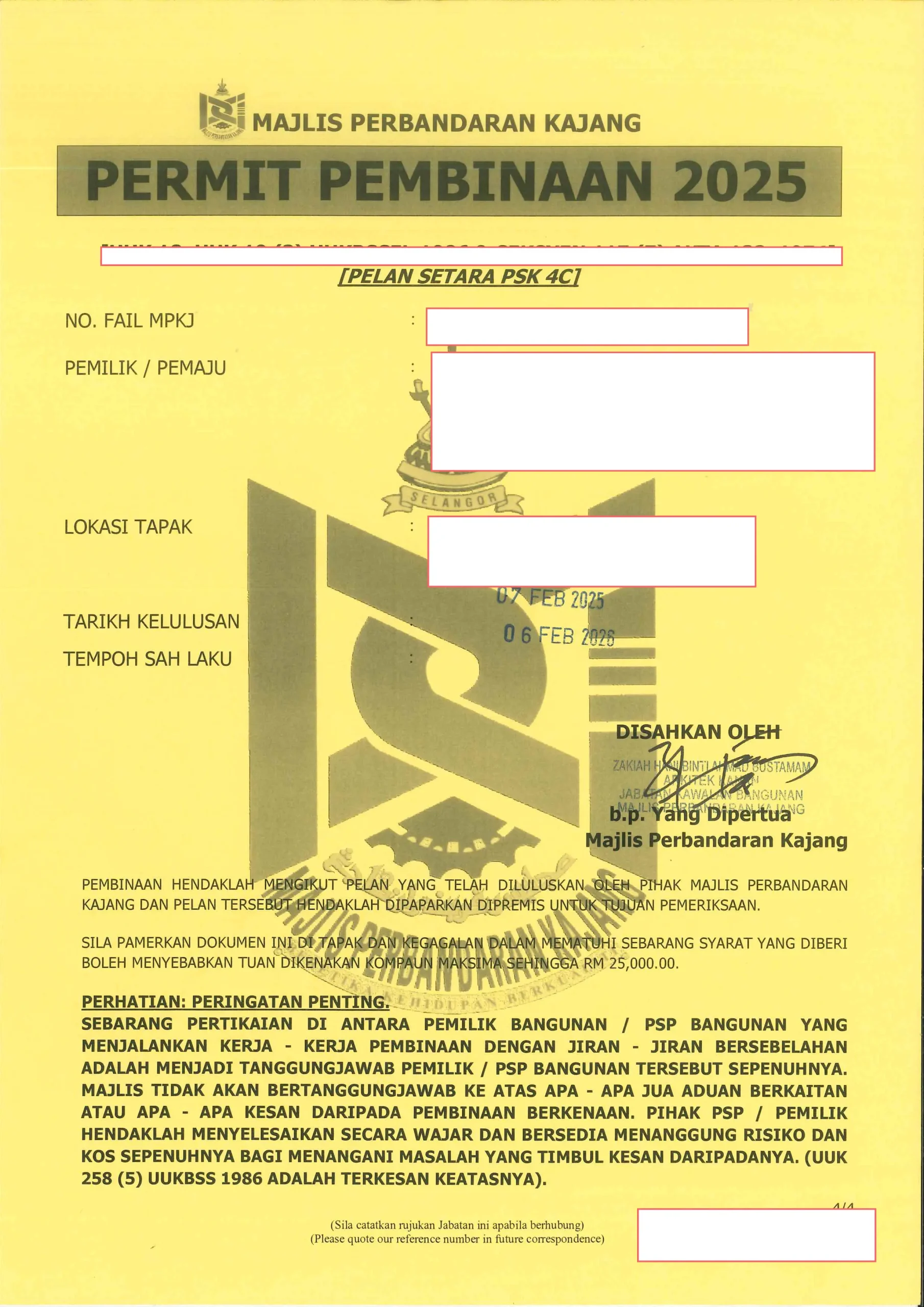
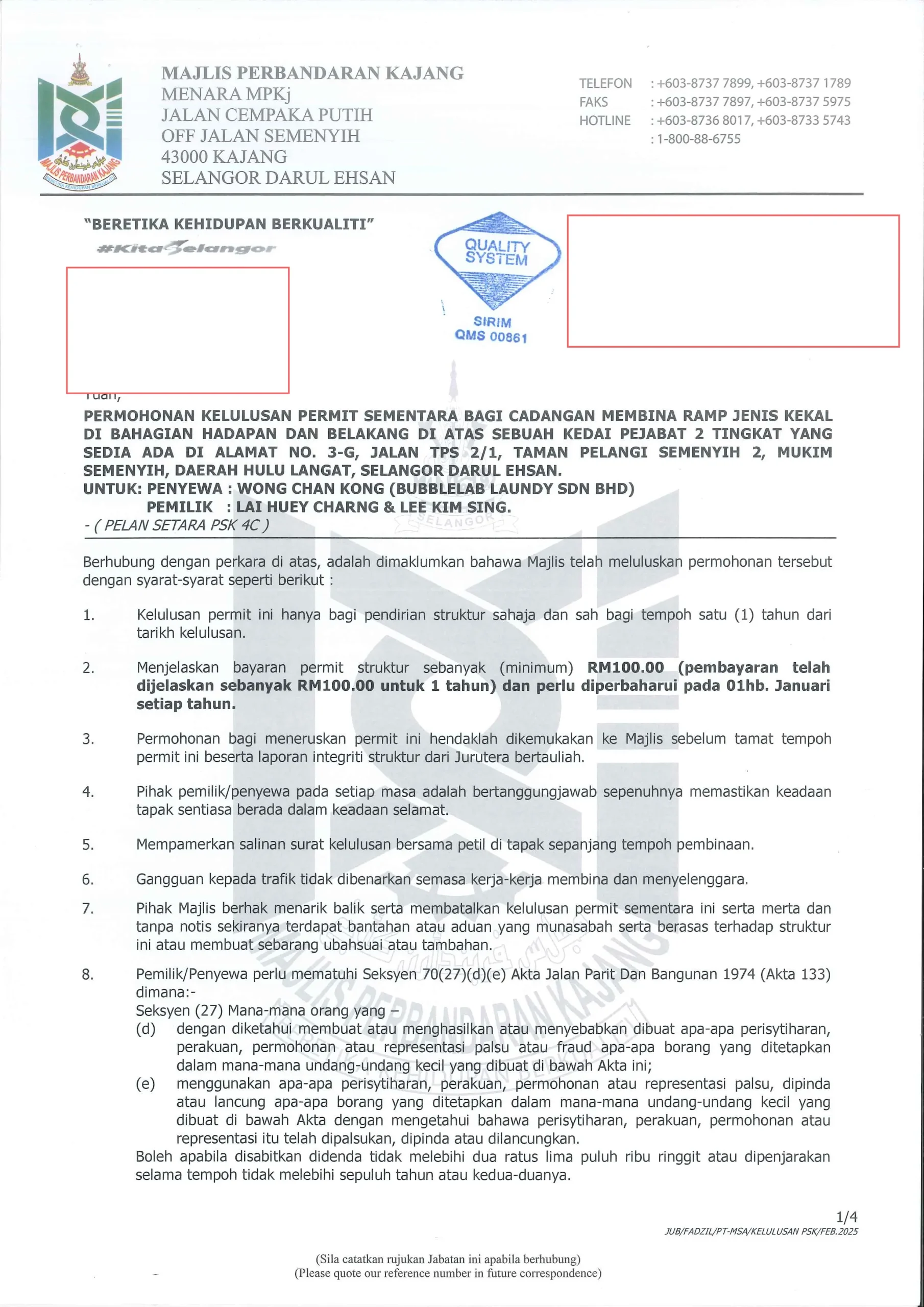
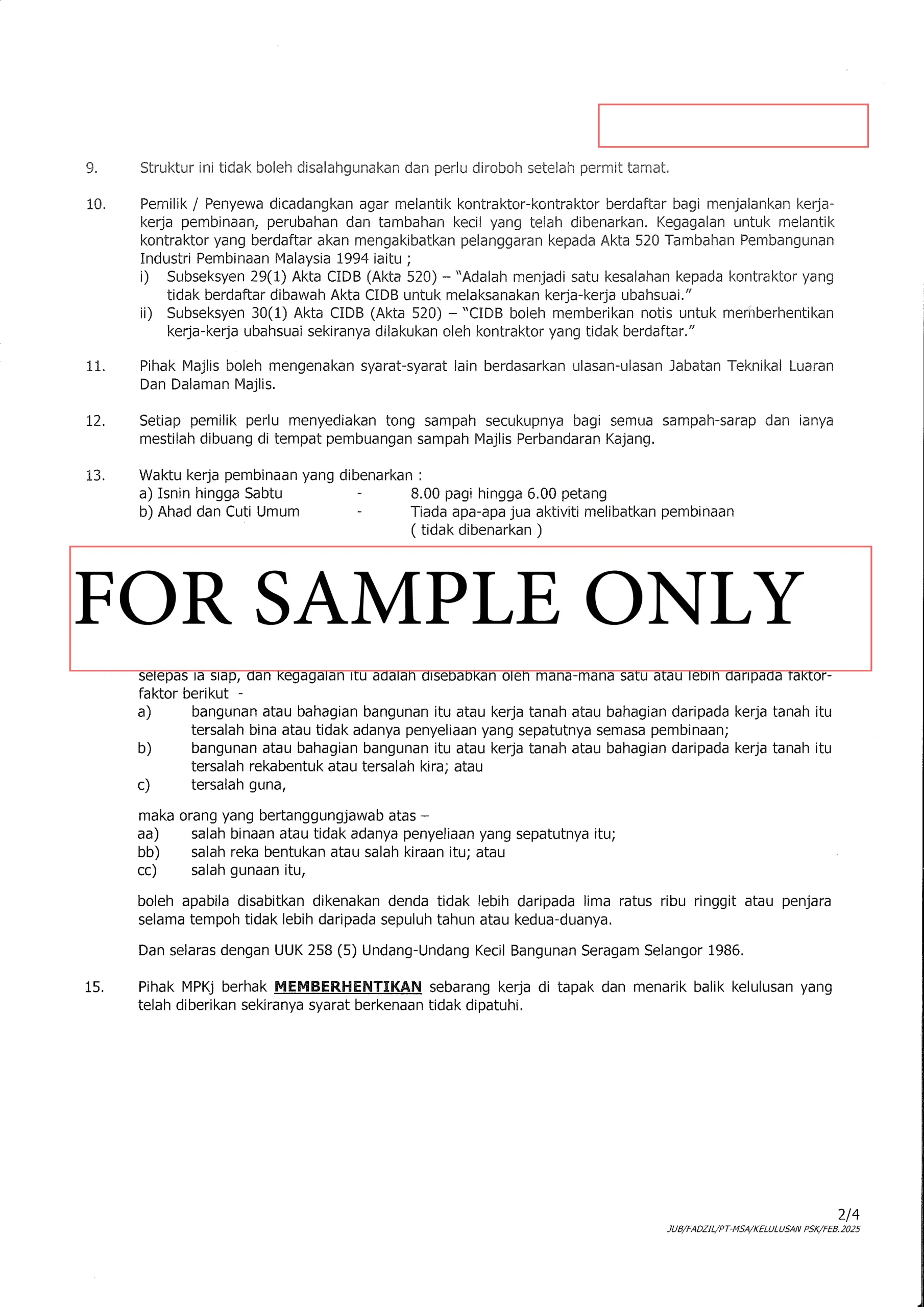
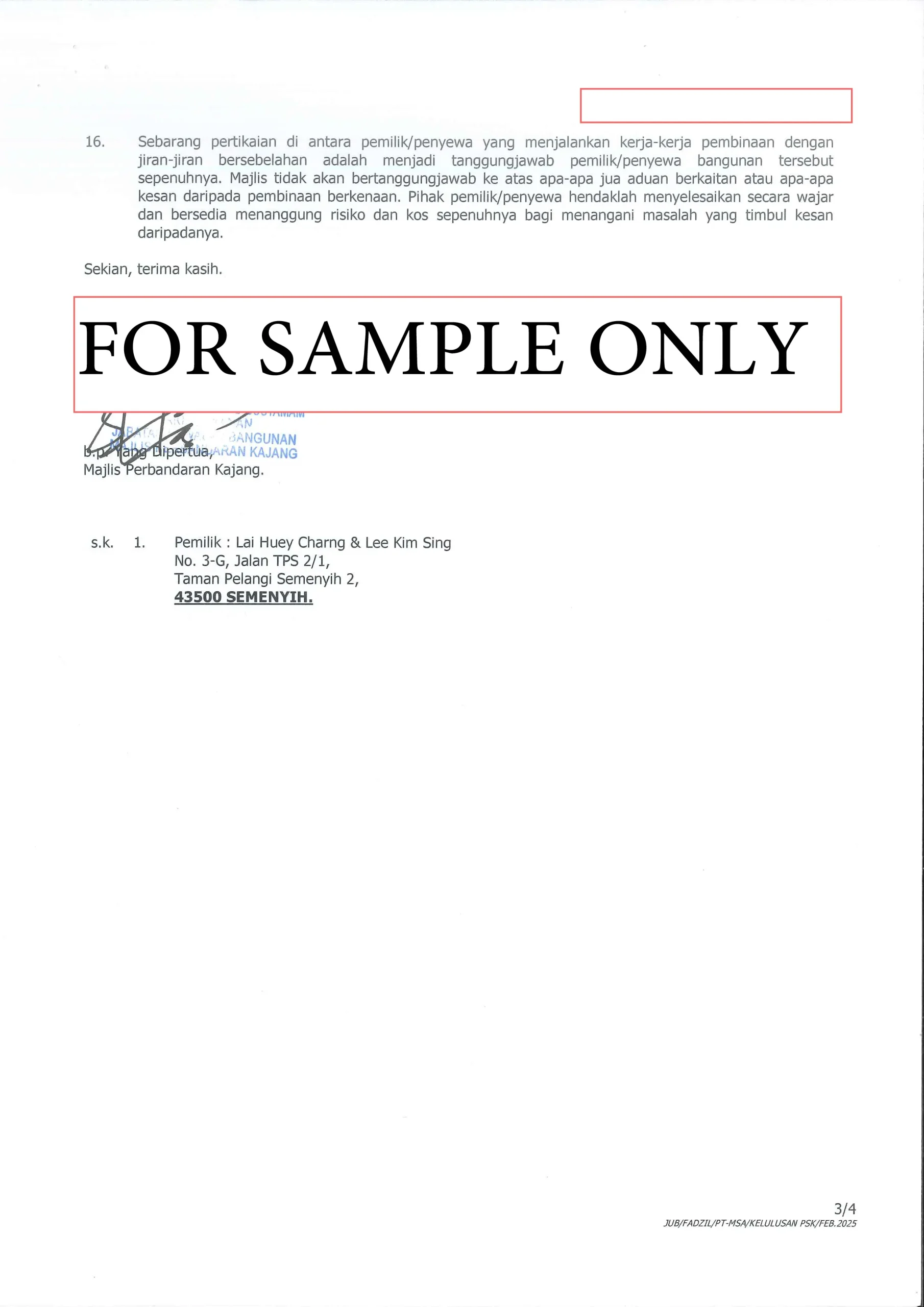
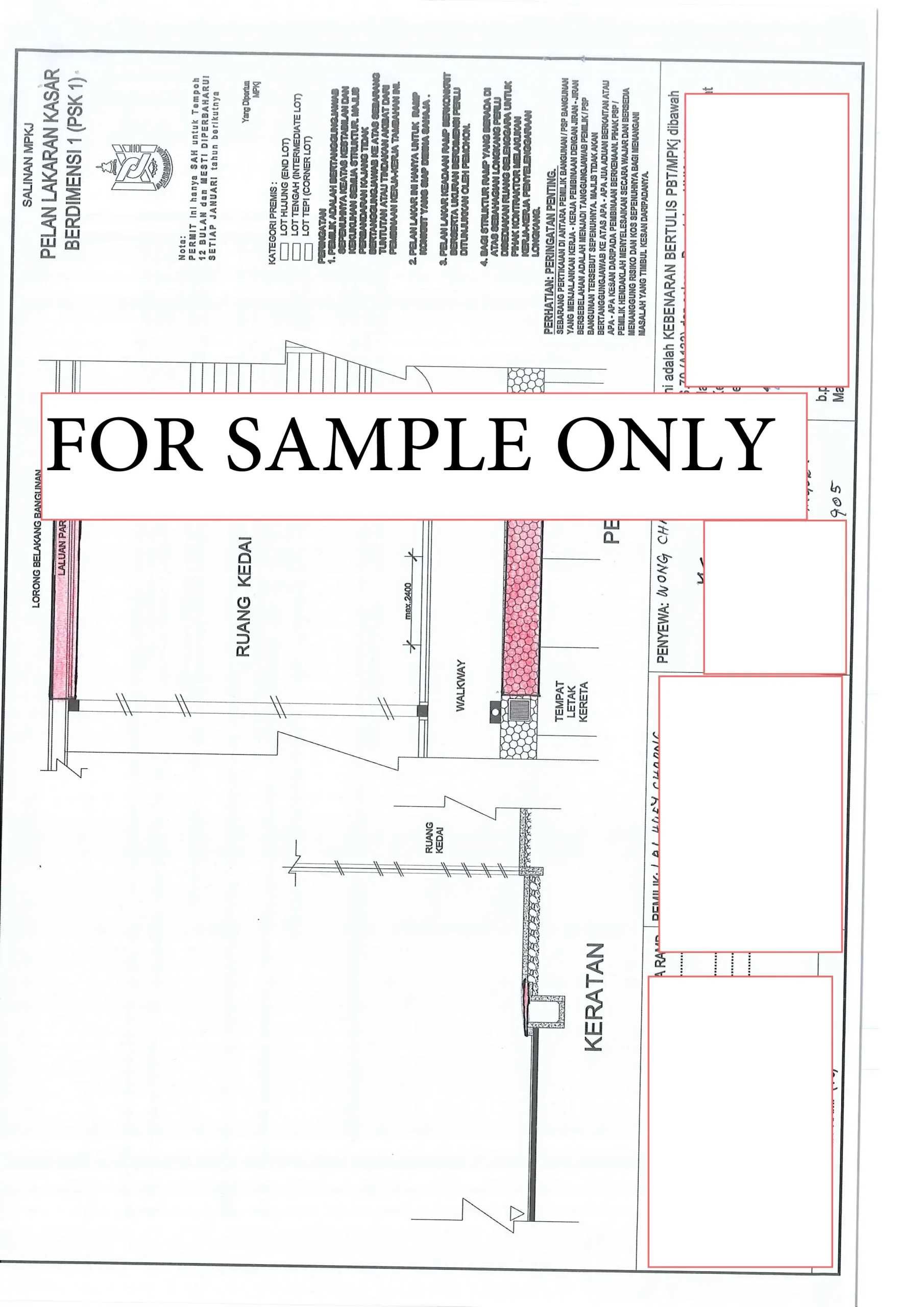
Permit KM & Development Order (Kebenaran Merancang)
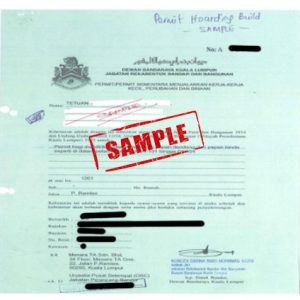
A Development Order — Kebenaran Merancang, or KM — is planning permission issued by the local planning authority under the Town and Country Planning Act 1976. It’s required before any building, engineering, mining, or industrial work proceeds, and before any material change of land or building use. Without it, construction or renovation is treated as an illegal development.
Applications go through the local authority’s One Stop Centre (OSC), which reviews the proposal, refers it to technical departments (drainage, fire, utilities), and may display it publicly before approval. Approved Development Orders specify the permitted use, plot ratio, building height, setbacks, and parking requirements for the site.
Typical timeline: around 2 to 3 months, depending on the council’s OSC meeting schedule and whether objections are raised during public display.
Licensed Manufacturing Warehouse (LMW)
An LMW licence, issued by the Royal Malaysian Customs Department, lets export-oriented manufacturers import raw materials and components without paying duty upfront, with duty fully waived on inputs used in exported goods. It requires a valid MIDA or MITI manufacturing licence first, and applies to manufacturers exporting at least 80% of their output.
For the full eligibility criteria, documents, cost, and process, see our dedicated
LMW License Malaysia guide.
Certificate of Origin (COO)
A Certificate of Origin confirms where exported goods were manufactured, and comes in two forms:
- Preferential COO — lets an exporter claim reduced or eliminated import duty under a free trade agreement. Issued by MITI through the ePCO system on the myTRADELINK portal.
- Non-preferential COO — simply confirms the country of origin for customs or documentary purposes, without a duty benefit. Issued by MITI or an authorised chamber of commerce such as MICCI or FMM.
Applicants must be registered with the Companies Commission of Malaysia and hold a manufacturing licence where applicable, along with supporting documents such as director’s statutory declarations and product invoices.
MITI & MIDA Approvals
MIDA (Malaysian Investment Development Authority) and MITI (Ministry of Investment, Trade and Industry) both issue manufacturing licences, but for different company profiles: MIDA covers companies with shareholders’ funds of RM2.5 million and above or 75 or more full-time employees, while MITI covers companies below that threshold — most SMEs. This manufacturing licence is a prerequisite for an LMW application, and separately supports Certificate of Origin applications and access to investment incentives.
KPDN WRT Permits
A Wholesale, Retail & Trade (WRT) permit is required for businesses with foreign equity involved in wholesale, retail, franchise, or distributive trade, regulated by KPDN (Ministry of Domestic Trade and Cost of Living). Applications are submitted through the BLESS portal, with approval typically valid for 2 years and renewal required before expiry. Documents generally include SSM registration, a tenancy agreement, proof of capital, and a business plan.
See our dedicated WRT / KPDN Permit guide for the full breakdown.
Which Permit Do You Need?
| If you are… | You likely need… |
| Constructing, renovating, or changing land use | Permit KM / Development Order |
| An export-oriented manufacturer seeking duty suspension | LMW Licence |
| Exporting goods and need to prove origin | Certificate of Origin (COO) |
| Setting up or expanding a manufacturing operation | MITI or MIDA Manufacturing Licence |
| A foreign-owned wholesale, retail, or trading business | KPDN WRT Permit |
General Application Process
Each permit has its own agency and system, but most follow a similar shape:
|
1
|
Identify the correct permit and issuing authority for your specific activity — this alone prevents most delays. |
|
2
|
Prepare documentation — company registration, technical drawings, business plans, or supporting certificates, depending on the permit. |
|
3
|
Submit through the relevant system — OSC for KM/DO, ePCO for Certificate of Origin, BLESS for WRT, or direct submission to Customs for LMW. |
|
4
|
Respond to review or inspection, then receive approval and issuance — timelines range from days (COO) to months (Development Order). |
Frequently Asked Questions
What is a Development Order (KM) in Malaysia?
Planning permission (Kebenaran Merancang) issued by the local planning authority under the Town and Country Planning Act 1976, required before any building, engineering, or land-use change can proceed.
How long does a Development Order (KM) approval take?
Typically 2 to 3 months, depending on the local authority’s OSC meeting schedule and whether public display raises objections.
What’s the difference between a preferential and non-preferential Certificate of Origin?
A preferential COO lets an exporter claim reduced or eliminated import duty under a free trade agreement, issued by MITI via the ePCO system. A non-preferential COO simply confirms where goods were made, issued by MITI or an authorised chamber of commerce.
Do I need a KPDN WRT permit if my company has no foreign shareholders?
WRT approval is primarily required for businesses with foreign equity or regulated trading activity. Fully Malaysian-owned wholesale and retail businesses are generally outside its scope — confirm against your specific shareholding structure.
Can one application cover multiple permits at once?
No. Each permit is issued by a different authority under different legislation, with its own forms and timeline. A project may need several in sequence, but they can’t be combined into one submission.
Why use a consultant instead of applying directly?
Each permit involves a different agency, submission system, and documentation standard. A consultant working across these approvals regularly can identify which permits actually apply and reduce the back-and-forth that causes delays.
How Maxime City Consultancy Can Assist
Maxime City Consultancy provides end-to-end permit application support, including:
|
Permit Assessment & Advisory Identifying required permits based on your business activities. |
Application Preparation & Submission Accurate preparation of forms, supporting documents, and technical requirements. |
|
Liaison With Government Authorities Coordinating with relevant ministries and agencies to facilitate approvals. |
Compliance & Renewal Support Assistance with permit renewals, amendments, and ongoing regulatory compliance. |
With experience across licensing, permits, audit, and business advisory, we help businesses minimise risks and approval delays.
Not sure which permit applies to your business?
Talk to us before you submit anything — identifying the right permit upfront is what actually saves time.