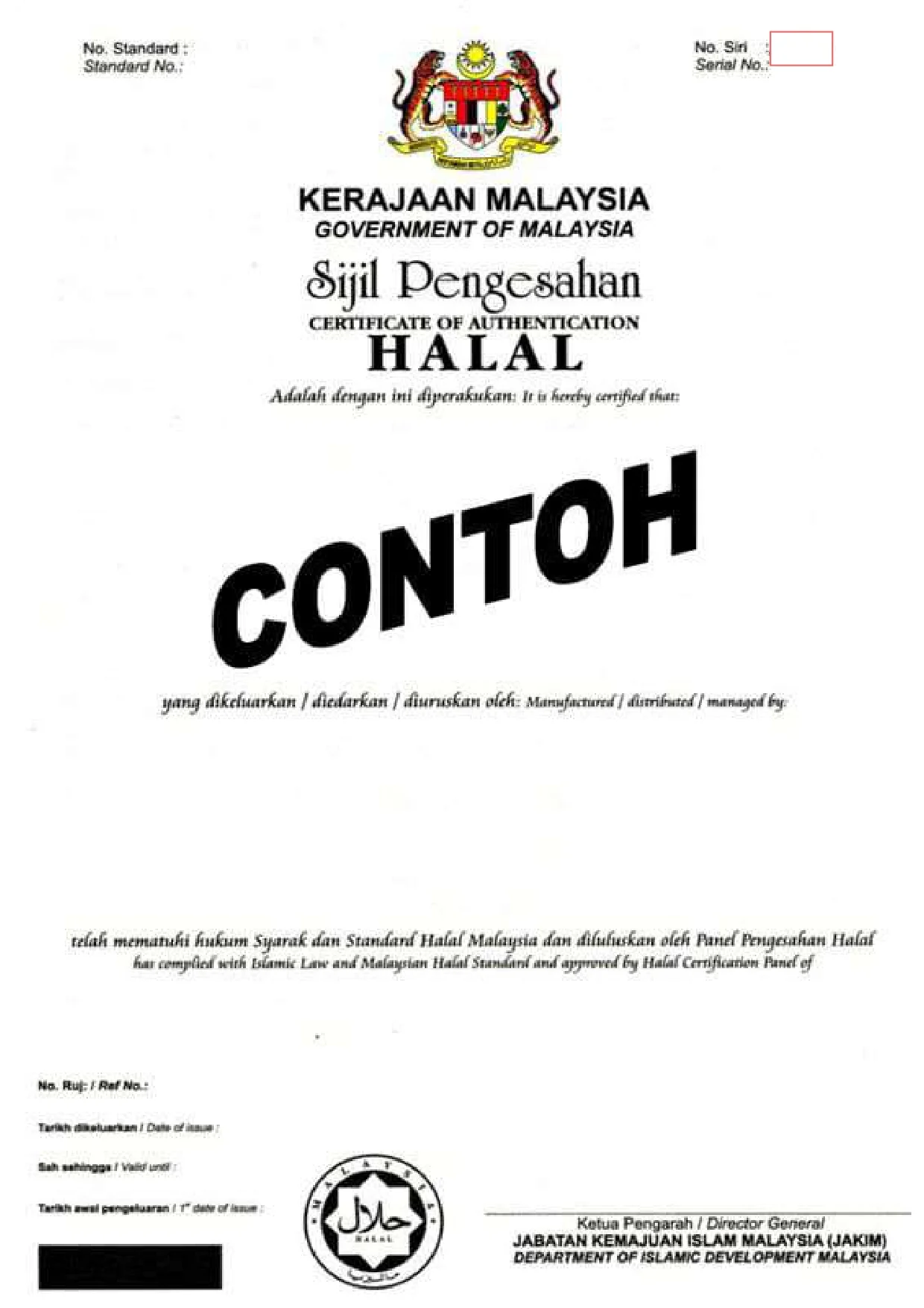
Obtaining halal certification in Malaysia is a critical step for businesses that want to serve Muslim consumers, build long-term brand trust, and access regulated domestic and export markets. The process is governed by JAKIM (Jabatan Kemajuan Islam Malaysia) and involves detailed compliance checks covering ingredients, production processes, storage, and staff handling procedures. JAKIM audits are thorough, and applications that aren’t properly prepared are routinely delayed or rejected.
Maxime License provides end-to-end halal certification services across food and beverage, manufacturing, cosmetics, and logistics. Many of the businesses we work with come to us after a failed or stalled application elsewhere — usually the result of incomplete documentation or a misunderstanding of what JAKIM actually requires at each stage.
What Is Halal Certification?
Halal certification is an official recognition, issued by JAKIM, that confirms a business’s products, ingredients, and operational processes comply with Islamic dietary and production standards. It’s most closely associated with food and beverage, but the scope is broader: cosmetics, pharmaceuticals, logistics providers handling halal goods, and packaging suppliers can all require certification depending on how their products or services touch the halal supply chain.
Malaysia’s JAKIM halal certification is recognised as one of the most credible halal standards globally, largely because of how rigorous the audit and compliance process is. For businesses looking to distribute through major Malaysian retailers, export to Muslim-majority markets, or partner with government-linked organisations, halal certification is frequently a hard requirement rather than a nice-to-have.
Who Needs Halal Certification in Malaysia?
Certification matters most for businesses where product integrity, ingredient traceability, and process compliance are directly tied to consumer trust and market access:
- Food and beverage outlets, manufacturers, and suppliers
- Central kitchens and food processing facilities
- Cosmetic and pharmaceutical companies
- Logistics and warehousing providers that store or transport halal-certified goods
- Ingredient and packaging suppliers feeding into halal-certified supply chains
Even B2B businesses that don’t sell directly to consumers often need certification because downstream customers require it as a condition of the supply relationship. If a client or retail partner has asked whether your business is halal-certified, the application process should start well before it becomes a deal-blocking issue.
Types of Halal Certification
JAKIM certification isn’t a single uniform category — the scheme a business falls under depends on what it produces and where it operates:
|
Domestic certification For businesses producing or selling within Malaysia. |
Manufacturing & processing facilities Covers production lines, storage, and handling procedures rather than a single product. |
|
Logistics & warehousing Addresses how halal goods are stored, transported, and kept separate from non-halal stock. |
Export-oriented certification For businesses supplying international markets that recognise JAKIM’s standard. |
Identifying the correct certification category at the outset avoids a common and costly mistake: applying under the wrong scheme and having to restart the process after JAKIM flags a mismatch during review.
Halal Application Process
The application runs through several distinct stages, each with its own documentation and compliance requirements. Skipping ahead or under-preparing any single stage is usually what causes delays.
|
1
|
Eligibility and readiness assessment Reviewing whether current operations, ingredients, and facilities already meet the baseline requirements for certification, or what needs to change first. |
|
2
|
Documentation preparation Compiling ingredient lists, supplier certifications, standard operating procedures, and facility records into the format JAKIM’s system requires. |
|
3
|
Submission through the JAKIM halal system Formally lodging the application along with all supporting materials. |
|
4
|
Inspection and audit A site visit and process review conducted by JAKIM-appointed auditors to verify that actual operations match what was submitted on paper. |
|
5
|
Approval and certificate issuance Once compliance is confirmed, JAKIM issues the halal certificate, which authorises use of the halal logo. |
JAKIM can request clarification or additional documentation at any stage. Professional guidance here isn’t about shortcutting the process — it’s making sure nothing submitted triggers an avoidable request for resubmission.
Documents & Requirements You’ll Need
Specific requirements vary by industry and certification category. Most applications require:
| # | Document |
| 1 | Full ingredient and formulation lists, including supplier-level sourcing information |
| 2 | Standard operating procedures for production, storage, and handling |
| 3 | Business registration and premise licensing documents |
| 4 | Supplier halal certificates for any halal-sensitive raw materials |
| 5 | Facility layout plans showing separation between halal and non-halal processes, where relevant |
Gaps in supplier-level documentation are one of the most common reasons applications stall — a business can have fully compliant internal processes and still get held up because a raw material supplier can’t produce their own certification.
Common Challenges Businesses Face
Many businesses underestimate how detailed halal certification actually is. Without proper preparation, applications are delayed or rejected due to:
- Missing or incomplete supplier-level halal documentation
- Standard operating procedures that don’t match what auditors observe on-site
- Facilities lacking clear separation between halal and non-halal processes
- Applying under the wrong certification category for the business type
- Difficulty responding to compliance issues raised mid-audit, without a clear remediation plan
Working with an experienced consultant helps identify these gaps before submission rather than during an audit, which is when they’re far more costly and time-consuming to fix.
Certificate Validity & Renewal
JAKIM halal certification isn’t a one-time achievement — certificates are issued for a defined validity period and require renewal, along with periodic compliance checks, to remain active.
Businesses that let certification lapse, or that make operational changes — new suppliers, new product lines, facility changes — without updating their certification status, risk losing halal recognition even after initially passing. Building renewal timelines and change-notification procedures into ongoing operations is as important as the initial application itself.
Frequently Asked Questions
What is halal certification in Malaysia?
An official recognition issued by JAKIM confirming that a business’s products, ingredients, and operational processes comply with Islamic dietary and production standards.
Who needs halal certification?
Food and beverage businesses, cosmetic and pharmaceutical companies, logistics and warehousing providers handling halal goods, and ingredient or packaging suppliers feeding into halal-certified supply chains.
What documents are required for halal certification?
Full ingredient and formulation lists, standard operating procedures, business registration and premise licensing documents, supplier halal certificates, and facility layout plans where relevant.
Why do halal certification applications get delayed or rejected?
The most common causes are incomplete documentation, missing supplier-level halal certificates, standard operating procedures that don’t match what auditors observe on-site, and applying under the wrong certification category.
Does halal certification need to be renewed?
Yes. Certificates are issued for a defined validity period and require renewal along with periodic compliance checks. Operational changes such as new suppliers or product lines also need to be reported to keep certification active.
What happens if my supplier isn’t halal certified?
Gaps in supplier-level documentation are one of the most common reasons applications stall — a business can have fully compliant internal processes and still be held up because a raw material supplier can’t produce their own certification.
Ready to Obtain Halal Certification Without Unnecessary Delays?
Our team guides you through every stage — from initial readiness assessment to final certificate issuance — helping your business meet JAKIM’s requirements efficiently and with confidence.